1553 · 16th century
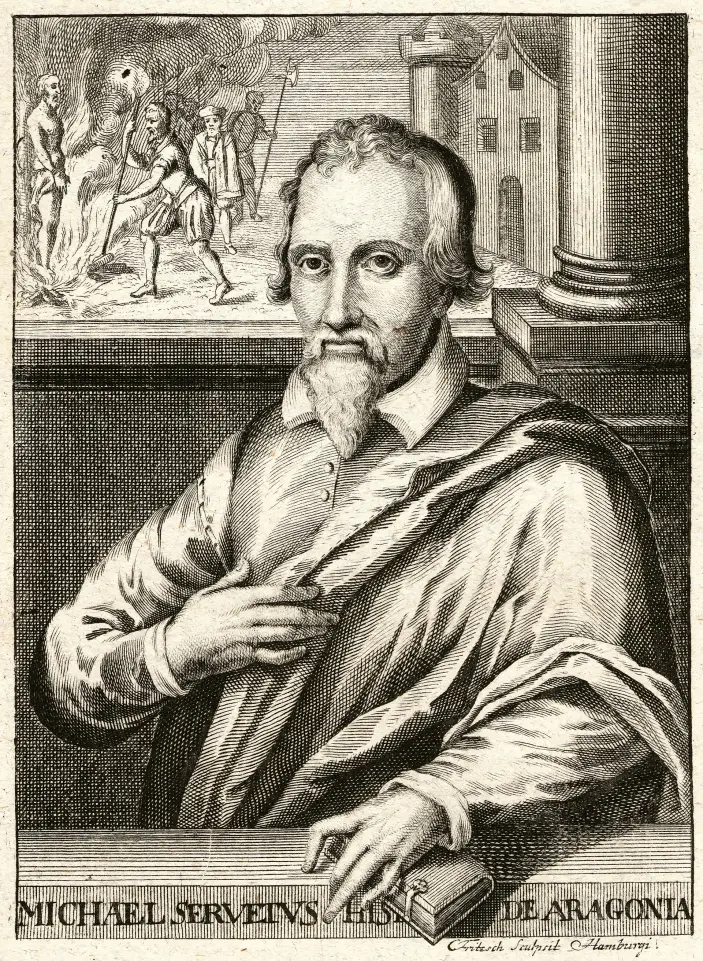
The execution of Michael Servetus in Geneva
The Spanish physician Michael Servetus rejected the Nicene doctrine of the Trinity and the eternal generation of the Son. He held it to be rationally untenable and absent from Scripture.
Servetus escaped from a French inquisitorial prison but was recognized in Geneva. There Calvin drew up 38 charges against him. All the Protestant cantons of Switzerland declared Servetus a heretic. In 1553 he was burned at the stake, though Calvin himself had proposed the more merciful penalty of beheading.
Sebastian Castellio criticized the execution. It later became one of the most contested episodes in the history of the Reformation. Contemporaries, however, mostly approved of it – they persecuted heretics in both Catholic and Protestant lands.
Key points
- Denial of the Trinity and the eternal generation of the Son
- 38 charges drawn up by Calvin
- Calvin had proposed beheading instead of burning
- Sebastian Castellio's criticism of the execution
- Shelley: in 1553, with Calvin’s Geneva influence weakened, the physician Michael Servetus, denying the Trinity, fled there from Catholic persecution. Calvin did not want to burn the heretic and wished him a more merciful death, but backed the execution; he was remembered as “the one who burned Servetus”
People
- Michael Servetus
- John Calvin
- Sebastian Castellio
Place
Geneva
Sources
- Tony Lane – Christian Thinkers (Russian edition), p. 179
- J. North – A History of the Church (Russian edition), p. 251
- Alister McGrath – Reformation Thought (Russian edition: «Theological Thought of the Reformation»), p. 380
- Justo L. González – A History of Christian Thought, vol. III: From the Protestant Reformation to the Twentieth Century (Abingdon, rev. ed. 1987), p. 102–103
- Justo L. González – A History of Christian Thought in One Volume (Abingdon, 2014), p. 309–310, 314
- Justo L. González – The Story of Christianity, vol. II (Russian edition), Part 1, ch. 7
- Bruce L. Shelley – Church History in Plain Language (Russian edition), Ch. 26, sec. «Женева: родина кальвинизма»
More on the doctrine
- The Reformation and the antitrinitarians: Calvin, Servetus, the Socini, the Arminians (16th – early 17th century)
Data compiled: 2026-11-09