91–96 AD · 1st century
The persecution under Domitian and the writing of Revelation
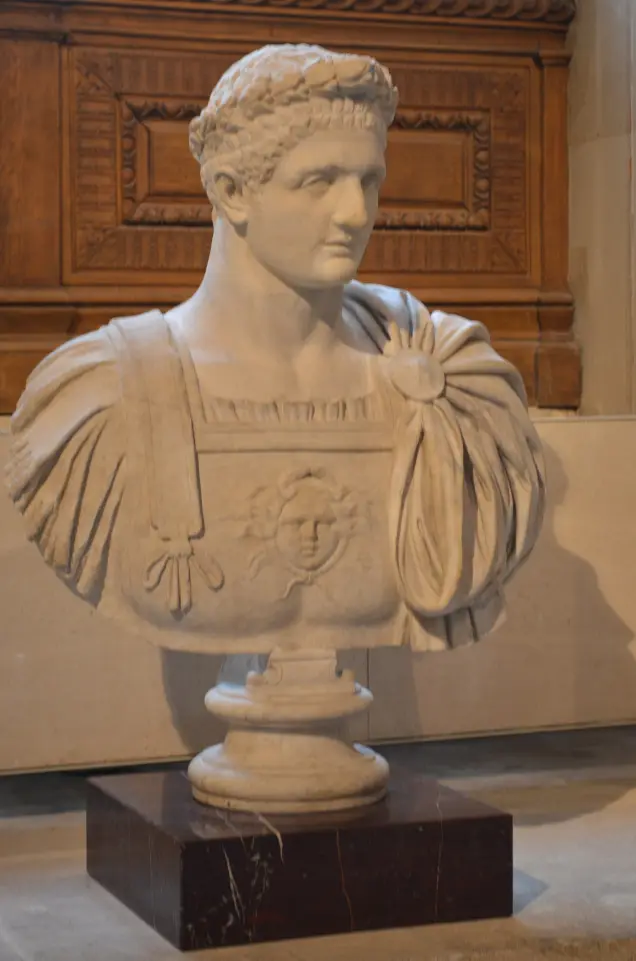
Domitian demanded to be called "lord and god" and sought to restore Roman traditions. He required Jews to pay the Temple tax into the imperial treasury. The authorities did not distinguish Jews from Christians. So persecution, on charges of "atheism", fell on all who followed "Jewish rites".
Persecutions are reliably attested in Rome and in Asia Minor. Asia Minor long remembered this time as a severe trial. In Rome the emperor's cousin Flavius Clemens was executed in 95 AD, and his wife Flavia Domitilla was exiled. This is evidence that Christianity had already penetrated the ruling dynasty itself.
The apostle John was exiled to the island of Patmos. There he wrote Revelation, with its harsh image of Rome as the "harlot". The persecution ended in 96 AD, when Domitian was killed by conspirators. The senate consigned his name to oblivion.
Key points
- Charges of "atheism" and of following "Jewish rites"
- The execution of Flavius Clemens (95 AD) and the exile of Flavia Domitilla – Christianity had penetrated the ruling dynasty
- The apostle John's exile to Patmos and his writing of Revelation there
- The persecution ended with Domitian's assassination in 96 AD
- Shelley: the emperor cult appears in Revelation: the red dragon wars on the saints through the sea beast (power) and earth beast (false prophet), and Christians conquer the dragon “by the blood of the Lamb” (Rev 12:11); in Asia Minor the emperor was honored as the spirit of Rome
People
- Domitian
- Flavius Clemens
- Flavia Domitilla
- John the Apostle
Place
Rome; Asia Minor; Patmos
Sources disagree
González (Story of Christianity, vol. I) gives no exact dates for Domitian's reign or the start of the persecution; North dates the persecution to 91–96 AD, noting that the start date (91 AD) may be an OCR or original error, and places further events in 95 and 96 AD.
Sources
- Justo L. González – The Story of Christianity, vol. I (Russian edition), Ch. «Первые конфликты с государством», sec. 1.12
- J. North – A History of the Church (Russian edition), p. 29–30
- Bruce L. Shelley – Church History in Plain Language (Russian edition), Ch. 4, sec. «Цезарь есть Господь»
Data compiled: 2026-11-09