1536–1542 · 16th century
Calvin and the reform of Geneva
In 1536 Calvin was passing through Geneva, a newly independent republic. Guillaume Farel demanded that he stay and lead the city's reform, and Calvin yielded.
A dispute over the right of excommunication led to the expulsion of Calvin and Farel in 1538. In Strasbourg Martin Bucer made Calvin pastor to the French refugees. There he probably conceived the idea of a consistory.
Calvin was recalled to Geneva in September 1541. He secured the "Ecclesiastical Ordinances", which established four offices (pastors, doctors, elders, deacons) and a consistory. It was made up of pastors and lay elders and was to oversee morals and doctrine.
In 1541–1542 the consistory took shape as a compromise between church and city authority. This gave Geneva the status of a model Protestant city-state.
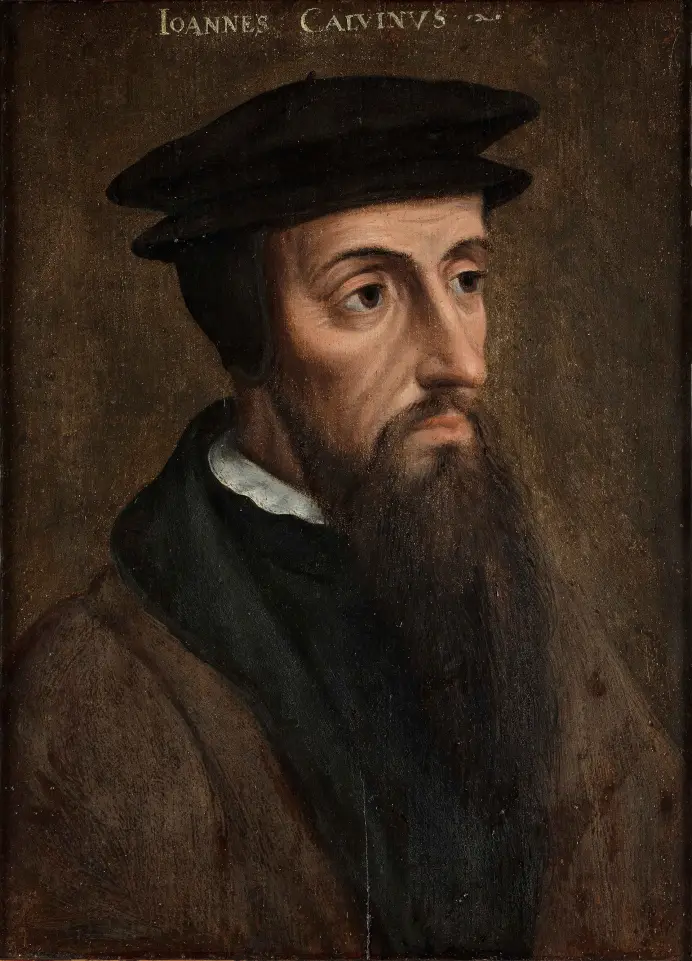
Key points
- Farel keeps Calvin in Geneva by threatening God's curse (1536)
- The expulsion of Calvin and Farel (1538) and the Strasbourg years
- Return to Geneva (September 1541) and the "Ecclesiastical Ordinances"
- The consistory (established 1542): pastors and lay elders
- Hazlett: Bucer had a pan-European missionary vision: French refugees awoke his interest in France, he meant his Latin commentaries on the Synoptics and Psalms for French and Italian readers, and he placed Calvin in Strasbourg’s French church (1538–1541). Bucer advised the Waldensians and the Bohemian Brethren and dedicated commentaries on the Gospels and Romans to English bishops Edward Fox and Thomas Cranmer.
- Steinmetz: unlike Luther, Calvin was not a university-trained theologian: his father, notary of the bishop of Noyon, quarrelled with the cathedral chapter, and instead of ordination Calvin was sent to study law at Orléans and Bourges (a doctorate in civil law). By his own account his chief ambition was a quiet life as a scholar editing classical texts.
- Shelley: Geneva in 1536 was in turmoil: a pleasure-loving city that had recently rejected both the Duke of Savoy and the pope; Farel had preached there four years, but Genevan Protestantism rested on political hostility to the bishop, not on doctrinal conviction. Calvin, planning to stay one night en route to Strasbourg, stayed after Farel’s rebuke – later: “God whirled me round in a vortex of events”. In Geneva (1536–1538) he demanded excommunication of the unworthy; exiled in 1538, he returned in 1541 and set up the Consistory.
People
- John Calvin
- Guillaume Farel
- Martin Bucer
Place
Geneva; Strasbourg
Sources
- J. North – A History of the Church (Russian edition), p. 247–249
- Justo L. González – A History of Christian Thought in One Volume (Abingdon, 2014), p. 311–312, 319, 324–325
- Justo L. González – The Story of Christianity, vol. II (Russian edition), Part 1, ch. 7
- Tony Lane – Christian Thinkers (Russian edition), p. 176, 178–181
- Alister McGrath – Reformation Thought (Russian edition: «Theological Thought of the Reformation»), p. 30, 278–281, 302–303, 308–309, 323, 379
- Justo L. González – A History of Christian Thought, vol. III: From the Protestant Reformation to the Twentieth Century (Abingdon, rev. ed. 1987), p. 139, 172–174
- The Cambridge Companion to Reformation Theology, ed. David Bagchi, David C. Steinmetz (2004), p. 113, 124–125
- Bruce L. Shelley – Church History in Plain Language (Russian edition), Ch. 26, introduction; sec. «Женева: родина кальвинизма»; Ch. 26, sec. «Женева: родина кальвинизма»
Data compiled: 2026-11-09