1294–1303 · 13th century
Boniface VIII versus Philip IV: the Bull 'Unam Sanctam' and the 'Slap of Anagni'
Pope Boniface VIII crushed the hostile Colonna clan. By the bull Clericis laicos he forbade the clergy to pay taxes to secular rulers without papal permission. In 1300 he proclaimed a jubilee year with full remission of sins for pilgrims.
In 1302 Philip IV of France convened the Estates-General with the third estate. The pope then issued the bull Unam Sanctam (1302). It proclaimed the most extreme form of papal supremacy – that submission to the Roman pontiff was necessary for every person's salvation.
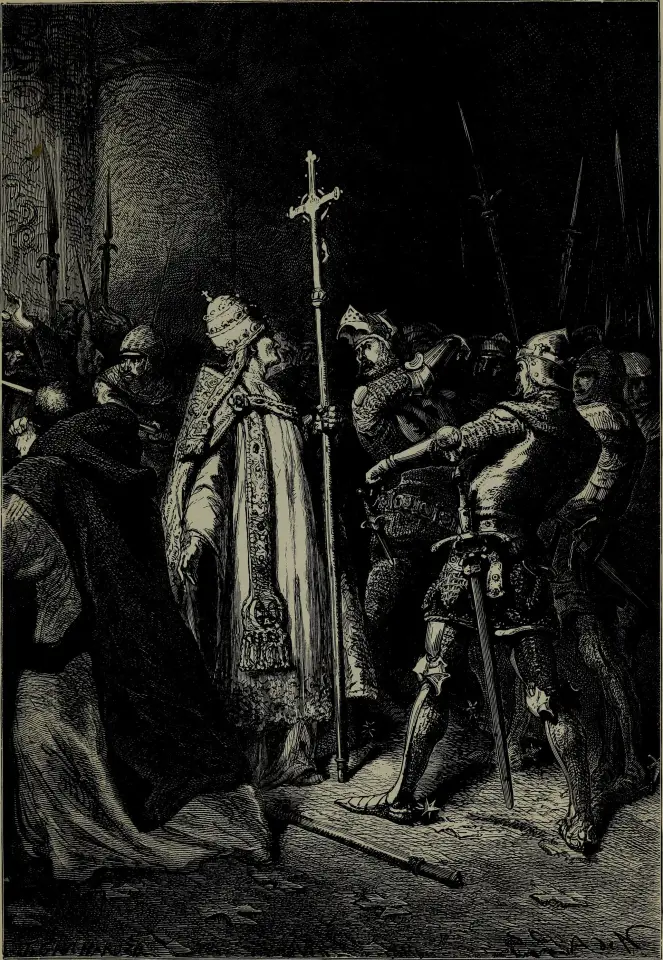
On 7 September 1303, on the eve of a new excommunication's proclamation, Philip's envoys Guillaume de Nogaret and Sciarra Colonna seized the pope at Anagni. Boniface was freed by the townspeople but soon died. The episode marked both the peak and the beginning of the decline of medieval papal claims.
Key points
- The bull Clericis laicos against taxing the clergy
- The bull Unam Sanctam (1302) – the most extreme claim to supremacy
- The seizure of the pope at Anagni (7 September 1303)
- Boniface's death soon after his release – a symbol of the decline of papal claims
- Shelley: on 22 February 1300 Boniface VIII proclaimed the first jubilee with full forgiveness of sins for pilgrims in Rome. The pope loved luxury and appeared in imperial robes: “I am Caesar! I am Emperor!”; forces ending papal sovereignty were already at work. In the 14th century Europe left its feudal past: land lost importance, cash and taxes appeared, and the Church struggled with national monarchies. Edward I of England and Philip the Fair, quarrelling over French lands, taxed the clergy; in 1296 Boniface's bull Clericis laicos threatened excommunication to a ruler taxing the clergy and a cleric paying without the pope's consent. Edward threatened to outlaw churchmen, and Philip banned export of gold and silver, depriving Rome of French collections. Boniface backed down, explaining that he had not abolished donations for defense in dire need; but kings could decide when such need arose, so Edward and Philip won. In 1301 Philip imprisoned a French bishop for treason; next year he convened the first Estates General and won unanimous support. Philip’s minister said: “My master’s sword is made of steel, the pope’s of words”. The bull Unam sanctam was the highest papal claim: “It is absolutely necessary for every human being to be subject to the Roman pontiff”. The lawyer Guillaume de Nogaret, skilled at fabricating charges, accused the pope of illegal election, heresy, simony and debauchery; he approved “voluntary” testimony: a witness was stripped, smeared with honey and hung over a beehive. Nogaret burst with a troop into the papal bedroom at Anagni; Boniface, 69, was held several days until townspeople freed him. A few weeks later he died: “he crept to power like a fox, ruled like a lion and died like a dog”. Anagni symbolizes papal decline as Canossa symbolized its rise: Christians no longer tolerated papal meddling in purely political affairs
People
- Boniface VIII
- Philip IV
- Guillaume de Nogaret
- Sciarra Colonna
Place
Rome; Anagni; France
Sources
- Justo L. González – The Story of Christianity, vol. I (Russian edition), Ch. 25, sec. 25.2; ch. 26, sec. 26.2
- Tony Lane – Christian Thinkers (Russian edition), p. 310–311
- J. North – A History of the Church (Russian edition), p. 199–201
- Bruce L. Shelley – Church History in Plain Language (Russian edition), Ch. 22, introduction; Ch. 22, sec. «Перемены в сонном царстве»; Ch. 22, sec. «Новый голос в христианском мире»
Data compiled: 2026-11-09