1003–1079 · 11th century
Berengar of Tours and the Eucharistic Controversy
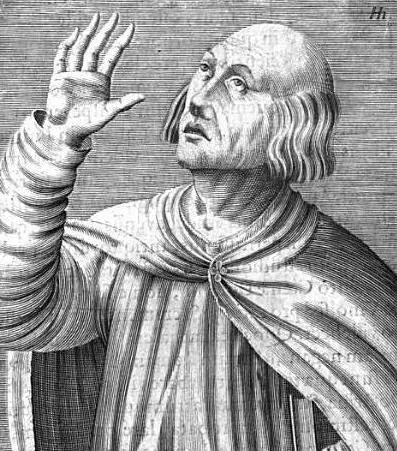
Around 1050 Berengar of Tours challenged the earlier realist doctrine of the Eucharist, which Gerbert had defended (1003). The dispute was over whether Christ's body is present in the Eucharist in substance or in power. Lanfranc and Cardinal Humbert fiercely opposed Berengar.
Berengar was repeatedly condemned, including at Rome in 1059 and again in 1079. The 1059 recantation formula was crudely realist (Christ's body "crushed by the teeth of the faithful"), while the 1079 formula was more cautious. The dispute directly prepared the ground for the doctrine of transubstantiation, dogmatized in 1215.
Key points
- Berengar of Tours's dispute with Lanfranc and Humbert (c. 1050)
- Condemnations at Rome in 1059 and 1079 with two different recantation formulas
- Direct preparation for the 1215 dogma
- Vaillancourt: the controversy ended with the profession of the Roman synod of 1079, which entered the final edition of Lanfranc’s treatise: the real presence is the same body born of the Virgin, made present on the altar by a “substantial conversion” of the elements. It was a “real first step” toward defining transubstantiation; the 1079 profession stayed the touchstone of orthodoxy until Aquinas
People
- Berengar of Tours
- Lanfranc
- Humbert
- Gerbert of Aurillac
Place
Tours; Rome
Sources
- Louis Berkhof – History of Christian Doctrines (Russian edition), p. 186
- Justo L. González – A History of Christian Thought in One Volume (Abingdon, 2014), p. 214–216
- Tony Lane – Christian Thinkers (Russian edition), p. 121
- The Oxford Handbook of Sacramental Theology, ed. Hans Boersma, Matthew Levering (2015), p. 248
More on the doctrine
- The eucharistic controversies of the 9th–11th centuries: Radbertus and Ratramnus, Berengar and Lanfranc (9th–11th centuries)
Data compiled: 2026-11-09