c. 500 (first attestation – Caesarius of Arles, d. 542) · 5th century
The Athanasian Creed (Quicunque vult)
The creed was attributed to Athanasius the Great only by later tradition: its authorship was questioned in the 16th century and rejected in the 17th. It was in fact composed, probably around 500, in southern Gaul. The first certain attestation of it comes from Caesarius of Arles (d. 542).
Its Trinitarian section is a condensed statement of Augustine's doctrine of the Trinity, down to an almost verbatim formula about three Almighties who are one Almighty. Its Christological section is an anti-Nestorian formula close to the Chalcedonian Definition.
The creed served to test the orthodoxy of clergy and as a brief statement of faith for the laity. By the 13th century in the West it became one of the "three creeds," alongside the Apostles' and Nicene. It was later adopted by Protestants as well.
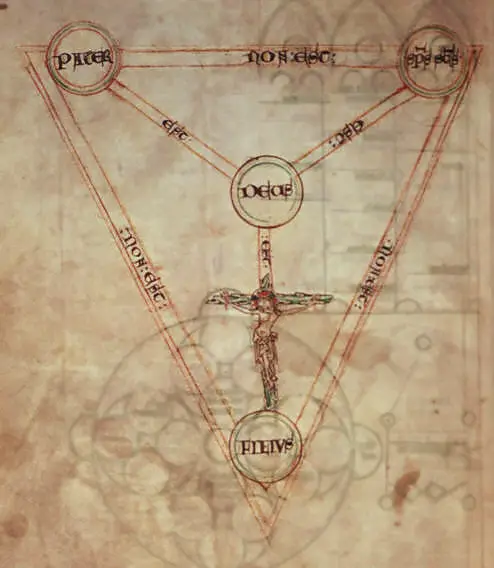
Key points
- Attributed to Athanasius only by tradition; probably composed c. 500 in southern Gaul
- The Trinitarian part is a condensed statement of Augustine's doctrine of the Trinity
- The Christological part is anti-Nestorian, close to Chalcedon
- Became one of the "three creeds" of the Latin West by the 13th century
- Adopted by Protestants (39 Articles, Formula of Concord, Synod of Dort)
People
- Caesarius of Arles
- Athanasius the Great
- Augustine of Hippo
Place
Southern Gaul
Sources
- Tony Lane – Christian Thinkers (Russian edition), p. 92–94
- Jaroslav Pelikan – The Christian Tradition: A History of the Development of Doctrine, vol. 1 (Russian edition), p. 380–381
More on the doctrine
Data compiled: 2026-11-09