1603–1610 · 17th century
The Arminian Controversy, the Remonstrance, and Socinianism
In 1603 a dispute over predestination and grace broke out in Leiden between professor Jacobus Arminius and the supralapsarian Franciscus Gomarus. Arminius remained a Calvinist. He died in 1609, and in 1610 his followers – Simon Episcopius, Johannes Uytenbogaert, Hugo Grotius, Philipp van Limborch – submitted the five-article "Remonstrance". Its supporters came to be called Remonstrants. The dispute became entangled with the political struggle between the merchant oligarchy (Oldenbarnevelt) and the party of Maurice of Nassau.
Almost simultaneously, in Poland, Faustus Socinus's disciples set out his anti-Trinitarian teaching in the Racovian Catechism. This came a year after Socinus's death (1605). The catechism was one of the later sources of English Unitarianism.
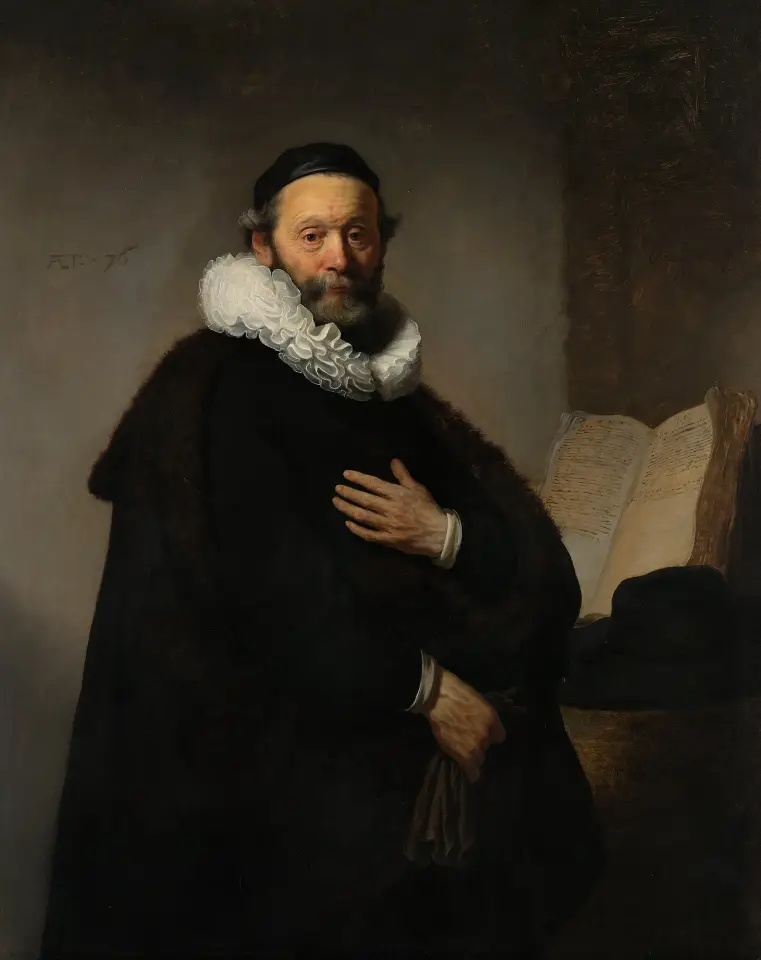
Key points
- The Arminius–Gomarus dispute in Leiden (from 1603)
- 46 pastors signed the five-article "Remonstrance" (1610)
- The dispute was tied to the political struggle between the merchant oligarchy and Maurice of Nassau's party
- In 1605 Faustus Socinus's disciples published the Racovian Catechism, a source of Unitarianism
People
- Jacobus Arminius
- Franciscus Gomarus
- Simon Episcopius
- Johannes Uytenbogaert
- Hugo Grotius
- Philipp van Limborch
- Johan van Oldenbarnevelt
- Maurice of Nassau
- Faustus Socinus
- Laelius Socinus
Place
Leiden; the Netherlands; Raków (Poland)
Sources disagree
The books agree on the dates of the Remonstrance (1610) and the Racovian Catechism (1605, a year after Socinus's death).
Sources
- Justo L. González – A History of Christian Thought in One Volume (Abingdon, 2014), p. 366–368, 309–310
- Justo L. González – The Story of Christianity, vol. II (Russian edition), Part 2, ch. 20
- Justo L. González – A History of Christian Thought, vol. III: From the Protestant Reformation to the Twentieth Century (Abingdon, rev. ed. 1987), p. 285–289, 102–103
- Tony Lane – Christian Thinkers (Russian edition), p. 186–187
- Louis Berkhof – History of Christian Doctrines (Russian edition), p. 108–109
More on the doctrine
- Arminius, the Remonstrance (1610) and the Synod of Dort (1618–1619) (1603–1619)
- The Reformation and the antitrinitarians: Calvin, Servetus, the Socini, the Arminians (16th – early 17th century)
Data compiled: 2026-11-09