251 · 3rd century
The lapsed after the Decian persecution and the schism of Novatian
During the Decian persecution many Christians sacrificed or obtained certificates of having done so, and the question arose whether to readmit the apostates and who had the right to decide – the confessors or the bishops. In Carthage the confessors issued "letters of peace," and Cyprian insisted that the right of reconciliation belongs to the bishop, who takes into account the recommendations of the martyrs (Epistle 10). The Council of Carthage in 251 adopted a moderate policy – to determine the degree of guilt and assign penance (Epistle 51.6) – and in 252, under the threat of a new persecution, decided to readmit at once those who had begun penance (Epistle 53.1). In Rome the presbyter Novatian, who refused forgiveness to the lapsed, set himself against Bishop Cornelius, and his supporters consecrated their own bishop.
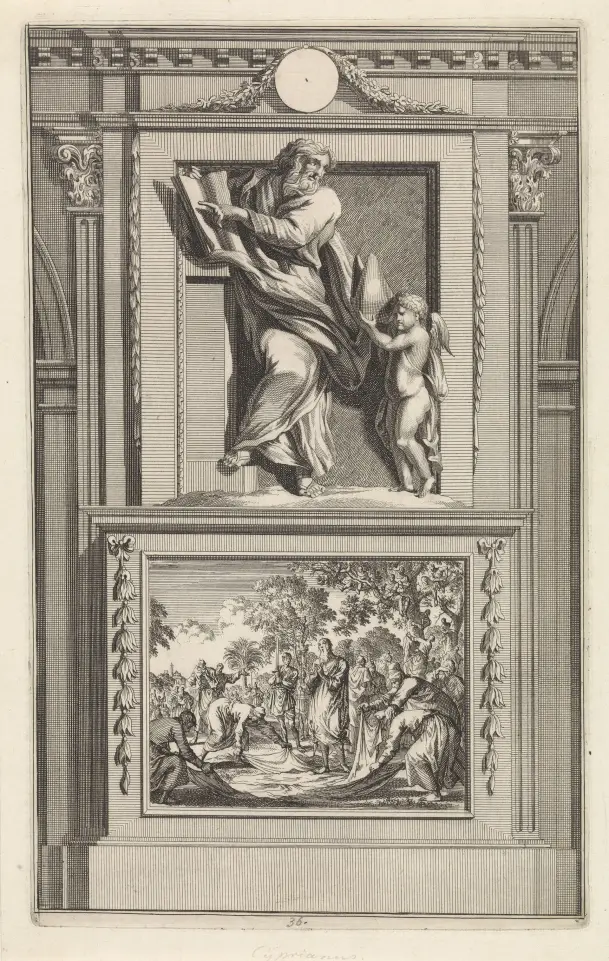
Positions
- The confessors and some priests
- Immediate reconciliation of the lapsed on the basis of the confessors' letters
- Cyprian
- The bishop decides, taking the martyrs' recommendations into account; God forgives when repentance is genuine
- Cornelius
- Forgive the repentant lapsed
- Novatian
- Do not readmit those who broke their baptismal vow; baptism in other communities is invalid
Key points
- González: the dispute concerned not so much the nature of penance as its scope; the question of fornication had already been settled by Callistus' victory
- Berkhof: the Novatianists held that the Church has no power to forgive apostates and rebaptized those who joined them
- Hall: since the community supported widows and the poor, excommunication became a severe punishment, and those who decided on admission and expulsion concentrated great power
- The Novatianist community existed apart from the "catholic Church" and spread to the East
- Shelley: in Carthage rumor held that confessors could “cover the failings of the lapsed with their virtues,” and many urged Cyprian to general pardon; this idea revived in the “treasury of merits” and the practice of indulgences
Outcome
The power of reconciliation was secured for the bishops, but the decisions did not win universal approval: schisms occurred in Carthage and Rome (Lane). According to Hall, the debates first strengthened the bishops' authority over self-appointed leaders but then raised the question of their own blamelessness.
People
- Cyprian of Carthage
- Novatian
- Cornelius of Rome
- Dionysius of Alexandria
- Decius
Terms
- confessor
- One who confessed the faith before a court and suffered, but survived.
- letter of peace – libellus pacis
- A confessor's letter granting a sinner readmission to the community.
- the lapsed
- Those who denied the faith during persecution.
Place
Carthage, Rome
Sources disagree
Hall: Decius' decree in 250, councils and schism in 251; Lane: persecution 249–251, councils in 251 and 252; González: c. 250–251.
Sources
Primary sources
- Cyprian of Carthage – Epistles, letters 10, 51, 53
Textbooks
- Stuart G. Hall – Doctrine and Practice in the Early Church (Russian edition), p. 20, 57–60, 63
- Justo L. González – A History of Christian Thought in One Volume (Abingdon, 2014), p. 102
- Tony Lane – Christian Thinkers (Russian edition), p. 31–32
- Bruce L. Shelley – Church History in Plain Language (Russian edition), Ch. 7, sec. «Рождение святых»
Related entries
- Develops: The holiness of the Church: Hippolytus and Callistus on the "mixed body" (early 3rd century (217–222))
- Answered by: Cyprian: the unity of the Church in the episcopate and "no salvation outside the Church" (251–258)
In church history
- Cyprian of Carthage and the controversy over the "lapsed" (248/249 – 252)
- The Novatianist schism at Rome (251)
Data compiled: 2026-11-17