1916–1955 · 20th century
Pierre Teilhard de Chardin: evolution and the Omega Point
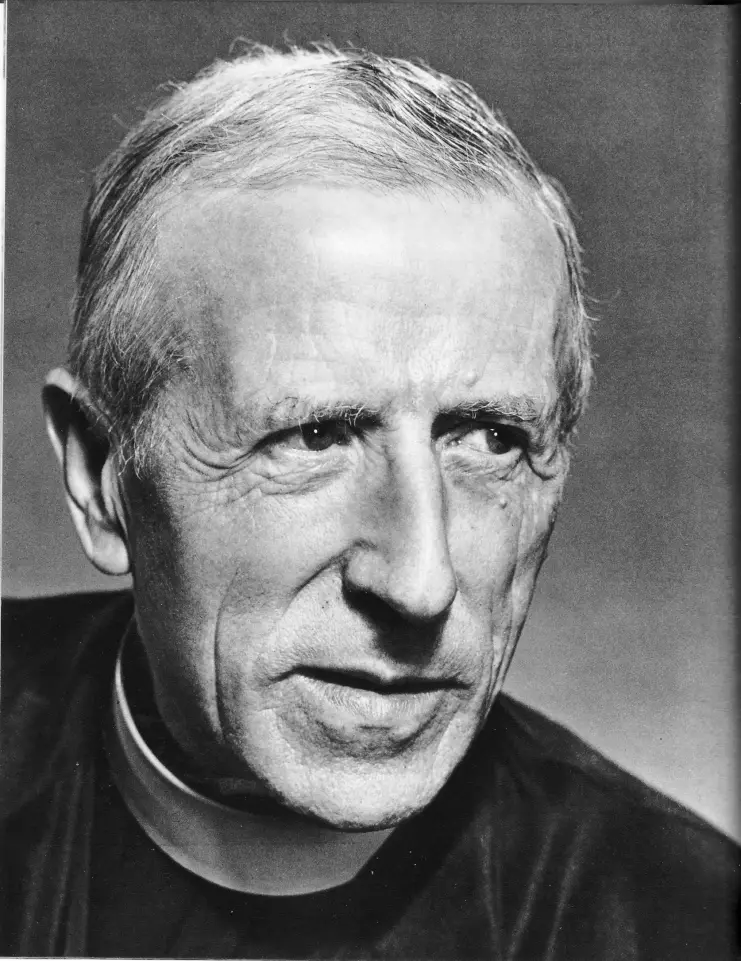
The Jesuit and paleontologist Pierre Teilhard de Chardin was one of the most creative Catholic thinkers of the century. He accepted evolution and saw in its movement a path toward the "Omega Point," Jesus Christ.
Church authorities forbade him to publish theological works during his lifetime. His major work, The Phenomenon of Man, was completed in 1938 but appeared only after his death in 1955. The book was received enthusiastically and influenced a number of later theologies, including liberation theology.
Key points
- Lifetime ban on publishing theological works
- The Phenomenon of Man (completed 1938, published posthumously in 1955)
- Enthusiastic reception of the book
- Influence on liberation theology and other theologies
People
- Pierre Teilhard de Chardin
Place
France; China
Sources
- Justo L. González – A History of Christian Thought, vol. III: From the Protestant Reformation to the Twentieth Century (Abingdon, rev. ed. 1987), p. 470–473
- Justo L. González – A History of Christian Thought in One Volume (Abingdon, 2014), p. 423, 426
- Stanley Grenz, Roger Olson – 20th-Century Theology: God and the World in a Transitional Age (Russian edition), p. 195–198
More on the doctrine
- Teilhard de Chardin: evolution, the "Omega Point" and the eschatology of process theology (1938–1955)
Data compiled: 2026-11-09