1974–1989 · 20th century
The Lausanne Movement for World Evangelization
In July 1974, 3,000 participants from more than 150 countries gathered in Lausanne (Lausanne Covenant, Introduction: "from more than 150 nations"); nearly half came from the "third world." They met to discuss the theme "Let the Earth Hear His Voice."
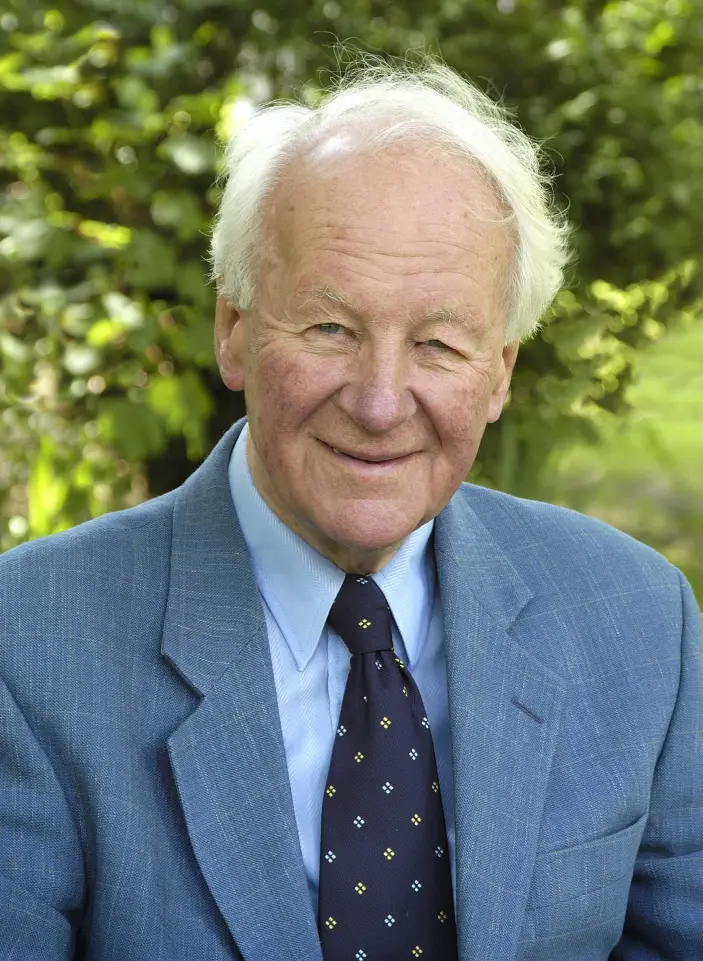
A drafting committee chaired by John Stott produced the "Lausanne Covenant" – the most authoritative statement of evangelical belief. It combines fidelity to biblical authority with repentance for past neglect of social responsibility. It affirms evangelism and social action as equal Christian duties.
Lausanne's significance for the evangelical movement has been compared to Vatican II's for Catholicism. It established evangelicalism as a "third force" alongside Catholicism and the World Council of Churches.
Subsequent Lausanne Committee consultations followed: Willowbank (1978), on gospel and culture, and Pattaya (1980). They culminated in the second International Congress in Manila (1989), with about 4,700 participants from 173 countries. The congress adopted the "Manila Manifesto."
Key points
- July 1974 – the Lausanne Congress, 3,000 participants from over 150 countries
- The "Lausanne Covenant," drafted under John Stott
- Evangelism and socio-political involvement affirmed as "both part of our Christian duty" (Lausanne Covenant 5), yet "in the Church's mission of sacrificial service, evangelism is primary" (6)
- Lausanne as a "third force" alongside Catholicism and the WCC
- Consultations at Willowbank (1978), Pattaya (1980), and the Manila Congress (1989)
- Shelley: inspired by Graham’s crusades, evangelicals held the World Congress on Evangelism in Berlin (1966) with delegates from 100+ countries. The Lausanne congress (1974) was convened by 142 evangelical leaders under Graham's honorary chairmanship; 2,700 participants attended. The Lausanne Covenant, signed by an overwhelming majority, affirmed “the visible unity of the Church in truth is God's purpose”; this showed how deep and mature evangelical views of unity had become. Afterwards a 48-member Continuation Committee was formed; Gottfried Osei-Mensah became executive secretary. The Covenant grounded the desire for unity in two reasons. The theological one: the Church's unity is God's gift through the Spirit, made possible by the cross (“He is our peace,” Eph 2:14); the Covenant allowed many forms of unity, but “institutional mergers” do not always support unity “in truth” (Eph 4:13). The pragmatic one: “the spread of the gospel… calls us to unity” – how preach reconciliation and remain in strife? By the end of the 1970s the WCC's ecumenical spirit had turned to social problems as the chief expression of unity, while conservative evangelicals again sought the chief role for spreading the evangelical message, hoping unity would follow
- Padilla: the Latin American Theological Fraternity (1970), an ‘evangelical renewal’, joined scriptural authority with attention to context and orthopraxis; Samuel Escobar’s 1969 Bogotá speech on the Church’s social responsibility set the theme of ‘integral mission’ that the Fraternity developed. At Lausanne (1974) a Latin American speaker urged renouncing ethnocentrism and North American ‘culture Christianity’ for ‘cross-fertilization’. Orlando Costas (1982) proposed testing church growth in four dimensions: numerical, organic, conceptual and diaconal; Fraternity theologians criticised the ‘homogeneous unit principle’ of Fuller’s Church Growth school as accommodating the gospel for numbers.
- George: in July 2000 some 10,000 evangelists and theologians from 200+ countries met in Amsterdam at Billy Graham’s invitation; Packer chaired the theologians.
People
- John Stott
- Samuel Escobar
- René Padilla
- Orlando Costas
Place
Lausanne; Willowbank (Bermuda); Pattaya; Manila
Sources
Primary sources
- Lausanne Covenant, introduction; para. 5–6
- Manila Manifesto, introduction
Textbooks
- Tony Lane – Christian Thinkers (Russian edition), p. 250, 318, 330–333
- Bruce L. Shelley – Church History in Plain Language (Russian edition), Ch. 44, sec. «Выражения единства у евангеликов»
- The Cambridge Companion to Evangelical Theology, ed. Timothy Larsen and Daniel J. Treier (2007), p. 279, 281–282, 284, 279–280, 280–281, 288
Data compiled: 2026-11-09