1928–1990 · 20th century
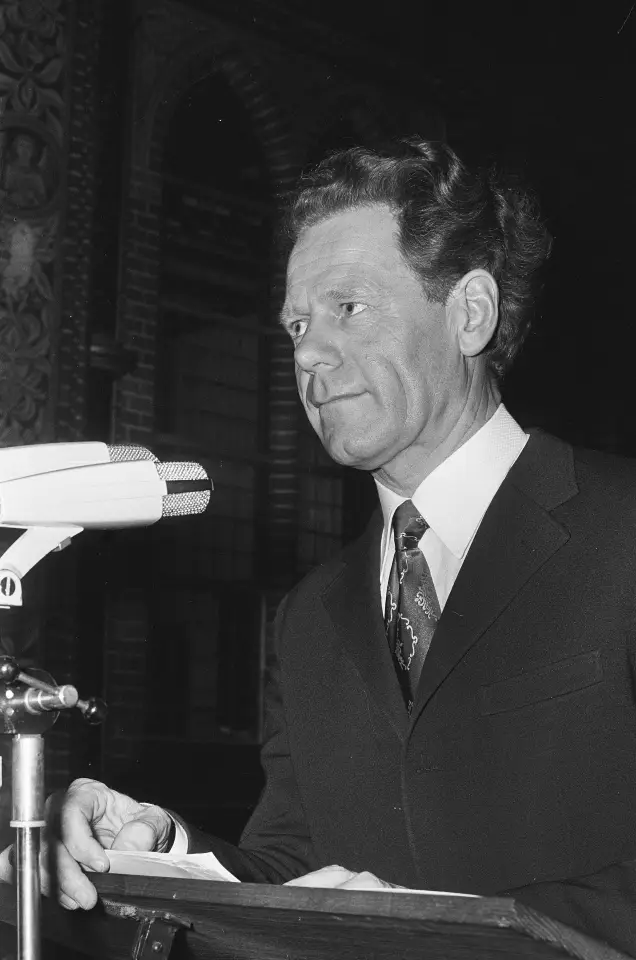
Hans Küng – the "rebellious Catholic"
The Swiss theologian Hans Küng was ordained in 1954. In his doctoral thesis "Justification" (1957) he argued for the fundamental unity of Karl Barth's doctrine of justification with that of the Council of Trent. Barth acknowledged this and invited Küng to his seminars. But the Congregation for the Doctrine of the Faith opened a file on him at the same time.
In 1960 Küng took a chair at Tübingen. He served as a consultant at Vatican II. In "Infallible? An Inquiry" (1970) he questioned the dogma of papal infallibility.
Then came the bestsellers "On Being a Christian" (1974) and "Does God Exist?" (1978). After them his conflict with Rome culminated on 18 December 1979: his missio canonica and his right to be called a Catholic theologian were withdrawn. Over a thousand students protested, and Tübingen University created a special institute for him.
In the 1980s Küng developed the idea of paradigm shifts in theology and engaged in interreligious dialogue.
Key points
- "Justification" (1957) – the unity of Barth's doctrine with Trent; friendship with Barth
- Consultant at Vatican II (1962–1965)
- "Infallible? An Inquiry" (1970) – questioning papal infallibility
- 18 December 1979 – stripped of the right to be called a Catholic theologian
- 1980s – paradigm shifts and interreligious dialogue
People
- Hans Küng
- Karl Barth
- John XXIII
- Karl Rahner
- John Paul II
Place
Rome; Tübingen
Sources
- Stanley Grenz, Roger Olson – 20th-Century Theology: God and the World in a Transitional Age (Russian edition), p. 384–399
- Tony Lane – Christian Thinkers (Russian edition), p. 313–315
Data compiled: 2026-11-09